
Tokenisation and the Acceleration of Claims
—When Financial Velocity Outruns The Real Economy

Tokenisation is widely presented as the next stage in the evolution of financial markets. By representing assets digitally and enabling programmable transactions, tokenised systems promise greater transparency, faster settlement and improved efficiency.
These developments may indeed transform financial infrastructure, however many commentators miss that the consequences of tokenisation will depend on the architecture the technology it is set to accelerate. The technology itself is a secondary consideration.[1][2]
Modern financial markets already operate through the continuous circulation of collateral supporting vast networks of financial claims. Securities move through repo markets, derivatives exposures are secured through margining arrangements, and liquidity flows sustain the system through chains of obligations linking institutions across the financial landscape.
If digital infrastructure simply increases the speed at which these processes occur, the result may not be a more stable financial system, but a faster version of the one we already have.
Understanding what tokenisation might mean for financial markets therefore requires a closer look at how claims, collateral and liquidity interact within the existing architecture of modern finance.[3]
The Velocity of Finance
Financial systems don’t just move currency and assets. They move claims, collateral and information, each at its own pace. Over time, the interaction between their respective velocities has become a defining feature of modern financial markets.
One of the most visible forms of financial motion is the circulation of collateral. Securities transferred in repo transactions, securities lending arrangements and derivatives margining may move repeatedly between institutions as they support successive layers of financing and risk management. Each time collateral changes hands, it anchors a new contractual relationship. In this way, a relatively small pool of assets can support a large network of financial claims.
Collateral velocity therefore plays a central role in sustaining modern financial markets. The faster collateral can circulate, the greater the volume of financial activity that can be supported by the same underlying assets.
Alongside collateral velocity operates another form of motion: the velocity of information. Financial markets continuously process information about asset prices, counterparty credit risk and collateral values. Advances in digital technology have dramatically increased the speed with which this information travels. Prices update continuously, collateral valuations are recalculated in real-time, and margin requirements can adjust automatically as conditions change.
The interaction between these two velocities—collateral and information—allows financial markets to operate with incredible speed and responsiveness. Yet there is a third velocity that moves very differently, the velocity of the productive economy.
Production unfolds according to rhythms that cannot be compressed indefinitely. Infrastructure must be built, raw materials must be extracted and refined, goods must be manufactured, services must be delivered and human creativity must be cultivated over time. Even in technologically advanced societies, productive capacity grows through processes that are inherently slower than the movement of financial claims.
When the velocity of finance begins to accelerate faster than the velocity of production, the relationship between the financial economy and the productive economy gradually diverges.
Financial claims may multiply rapidly, supported by circulating collateral and continuous flows of information, while the underlying capacity to generate real economic value expands more slowly.
As long as liquidity remains abundant and collateral retains credibility, the system can continue to operate in this state, but the divergence between financial velocity and productive velocity becomes an important structural feature of the system itself.
What appears to be financial growth is often the expansion of claims circulating within the financial system itself, increasingly supported by resources drawn from the productive economy.
In such a system, the expansion of finance no longer reflects the growth of production; it reflects the multiplication of claims upon it.
The Debt Engine
Beneath the accelerating velocities of collateral and information lies another force that helps sustain the expansion of modern financial markets: the structure of the monetary system itself.
In contemporary economies, most currency enters circulation through credit creation. When banks extend loans, they simultaneously create deposits, expanding the currency supply within the financial system, supporting transactions throughout the economy.
But credit creation introduces an important feature into the system. Loans must be repaid not only with the principal that was originally created, but also with interest. The interest component is not created at the moment the loan is granted. Instead, it must be generated through future economic activity.
As a result, the system is required to rely on a continuous process of credit expansion. New lending introduces additional liquidity into the financial system, helping borrowers service existing obligations and sustaining the circulation of collateral that supports financial markets.
Over time, this dynamic contributes to the growth of financial claims relative to the underlying productive economy. Collateral supports financing transactions, financing supports additional claims, and expanding credit provides the liquidity needed to keep the system functioning.
In this sense, the modern monetary system acts as a kind of engine driving financial expansion. As long as credit continues to grow and collateral remains credible, the circulation of financial claims can continue to accelerate.
Yet the process also introduces a structural tension. Productive activity must ultimately generate the income required to service the growing pool of financial obligations. When the expansion of financial claims begins to outpace the capacity of the productive economy to sustain them, the system becomes increasingly dependent on continued credit expansion and liquidity support.
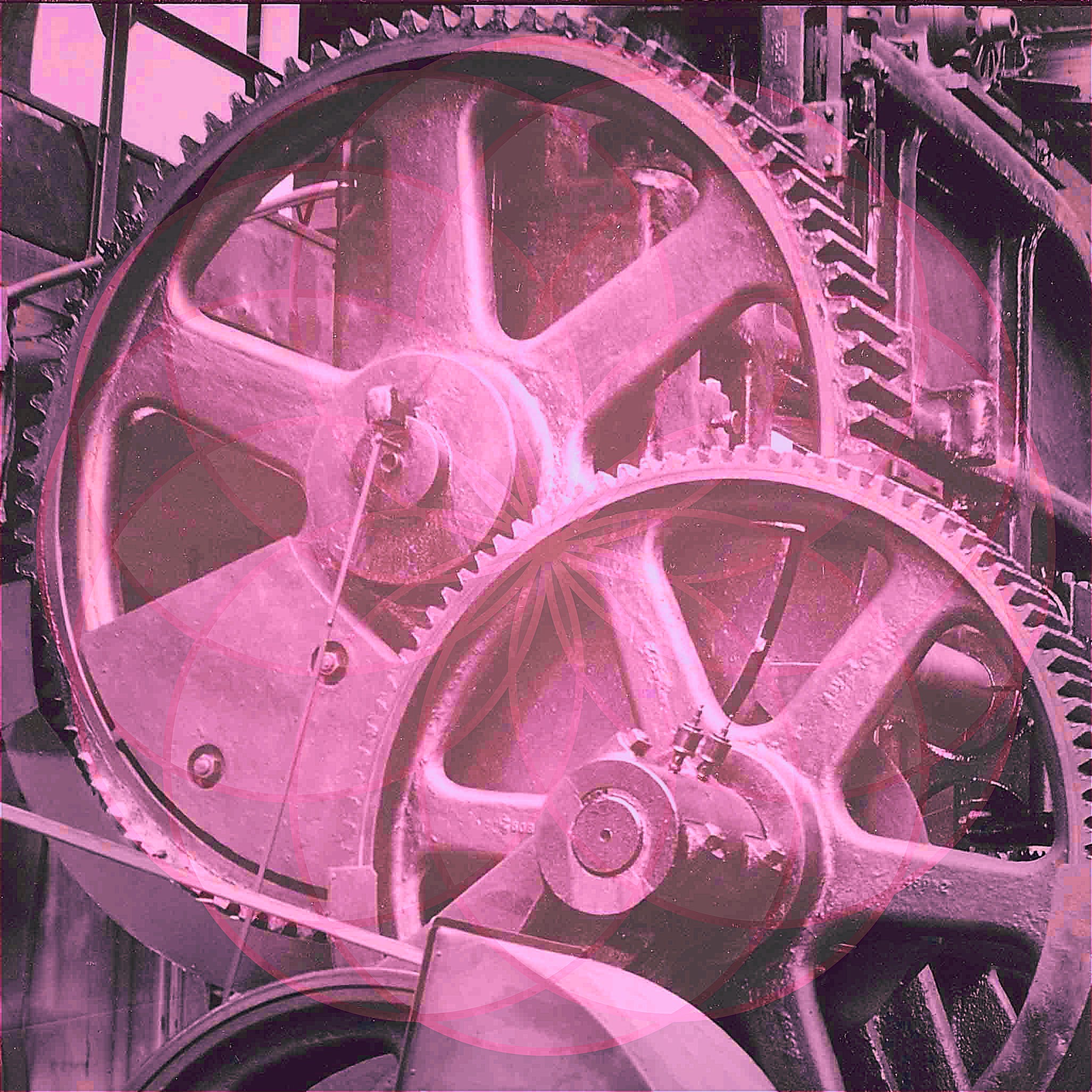
The wheel can continue spinning for long periods under these conditions, but the stability of the system becomes progressively more sensitive to changes in interest rates, collateral values and the overall confidence in financial markets.
When the Wheel Spins Too Fast
As long as liquidity doesn’t dry up and the market continues to trust the quality of the collateral, the expansion of financial claims can continue for long periods. Collateral circulates through markets, information flows rapidly between participants and new credit sustains the system’s momentum. Under these conditions, the financial economy can grow far larger than the productive base that supports it.
However, the system also contains an inherent constraint. The income required to service financial obligations must ultimately be generated by productive activity— by workers contributing their labour and creativity, by businesses producing goods and services, and by societies building the infrastructure that supports economic life.
When the velocity of financial claims begins to accelerate far beyond the velocity of production, the relationship between the financial economy and the productive economy can become increasingly strained. Collateral may continue to circulate, and financial markets may continue to generate new claims, but the underlying productive capacity to sustain those claims struggles to keep up.
Over time, this divergence can make the system more sensitive to shifts in interest rates, changes in collateral values or disruptions in liquidity. If confidence in the stability of the collateral base begins to weaken, the circulation of collateral may slow. Institutions may become more cautious in extending credit, margin requirements may rise and financial claims may begin to contract rather than expand.
When this occurs, the dynamics that previously sustained the system can reverse. The circulation of collateral slows, liquidity becomes scarce and financial claims begin to unwind through the same channels that once supported their expansion.
In such moments, the metaphorical wheel that has been spinning ever faster begins to lose momentum.
What once appeared to be a continuously accelerating system reveals the limits imposed by the underlying productive economy which it feeds off.
Two Possible Digital Futures
The growing interest in tokenisation reflects a broader recognition that financial infrastructure is entering a period of transformation. Distributed systems, programmable assets and digital ledgers may allow transactions to be executed and settled more quickly, with greater transparency and lower operational lag.
However, the implications of these technologies depend fundamentally on how they are used.
If tokenised systems simply accelerate the existing architecture of modern finance, the result may be an even faster cycle of claims creation and collateral circulation.
Assets could move around the clock through automated financing arrangements, collateral could be redeployed with minimal friction and financial claims could multiply at machine speed. In such an environment, the divergence between financial velocity and productive velocity could widen further at an increased pace.
The financial economy would become increasingly dynamic and interconnected, while the productive economy would struggle to expand, competing with the resources required to sustain the financial economy. The architecture of finance would remain centred on liquidity management, collateral circulation and the continuous expansion of financial claims.
There is another possibility offered by digital systems.
If digital infrastructure is designed to enshrine clear personal property rights and direct settlement, financial relationships could be structured differently.
Ownership could be recorded and transferred with precision, obligations could settle through the transfer of property rather than the perpetual rollover of claims, and financial participation could become more closely aligned with productive activity.
In such a system, digital technology would not merely accelerate the existing financial architecture. It could help restore a hierarchy in which property forms the foundation and claims arise only where they serve productive purposes.
Tokenisation therefore presents more than a technological development. It represents a choice concerning the architecture of the financial system itself. The choice we face is whether digital finance ultimately will amplify the velocity of claims or whether it will support a more coherent relationship between finance and production. This will not be determined by the speed of the technology, but on the principles embedded within the infrastructure that governs it.
A financial system can continue to accelerate the circulation of claims, but it cannot accelerate the creation of real value beyond the limits of the productive economy that sustains it. When the velocity of finance continues to increase while production moves at its natural pace, financial expansion begins to draw ever greater resources from the productive economy on which it relies.
The question we need to ask is not whether financial systems will become faster, but whether the financial architecture we build for the future remains anchored in the creation of real value. An architecture grounded in clear property rights would not simply restrain the multiplication of claims; it would allow new forms of exchange in which creative and productive contributions can be shared more directly across the economy.
About the Author: Anna Thalena Iversen is a former City of London financial services lawyer who is now engaged in value-aligned finance. Anna has spent more than 20 years in financial services working for financial institutions, law firms and consultancy firms. She left the profession in 2016 after the passing of her parents to cancer, embarking on a new career in health and wellbeing where she became involved in a number of start-up and scale-up business ventures using novel, unique protocols and technologies. Since leaving her first career in finance, Anna has committed herself to re-imagining how the world of financial services could evolve to become aligned with human creativity, generating abundance rather than acting as its impediment—forcing humanity to focus on survival instead of thriving. She is convinced there is far more in store for humanity than what we have thus far seen and experienced, and has devoted her time and energy to projects that support these endeavours, in the knowledge that the word is mightier than the sword. You can find Anna’s work on Substack Substack Anna Iversen
[1] This essay is part of a series where I challenge the assumption that decay and decline are woven into the fabric of the universe itself, showing how our financial, cultural, and political systems have been built on an entropic logic of siphoning and scarcity—and how a very different design is possible. The keystone essay entitled “From Entropy to Creative Coherence—Finance, Geometry, and the Return of Living Order” frames this journey of exploration, and it can be found here From Entropy to Coherence_Anna Iversen . This series of essays form both a diagnosis of our caged existence, and a vision of the coherence we could choose instead.
[2] I would like to dedicate this essay to the late Lyndon H. LaRouche, Jr. (1922-2019), whose explorations of entropy and “negentropy” in political economy paved the way for much of what follows. His work continues to inspire those of us who believe that creativity, not decay, is the true measure of value.
[3] For a deeper exploration of the relationship between claims, collateral and liquidity in our modern financial system, please refer to my earlier essay entitled ‘From Property to Collateral—How Modern Finance Multiplies Claims’ From Property to Collateral How Modern Finance Multiplies Claims